Open data and AI for peptide discovery
OpenPep brings together large-scale experiments, an open peptide–protein binding database, and AI models to help researchers identify promising peptides.
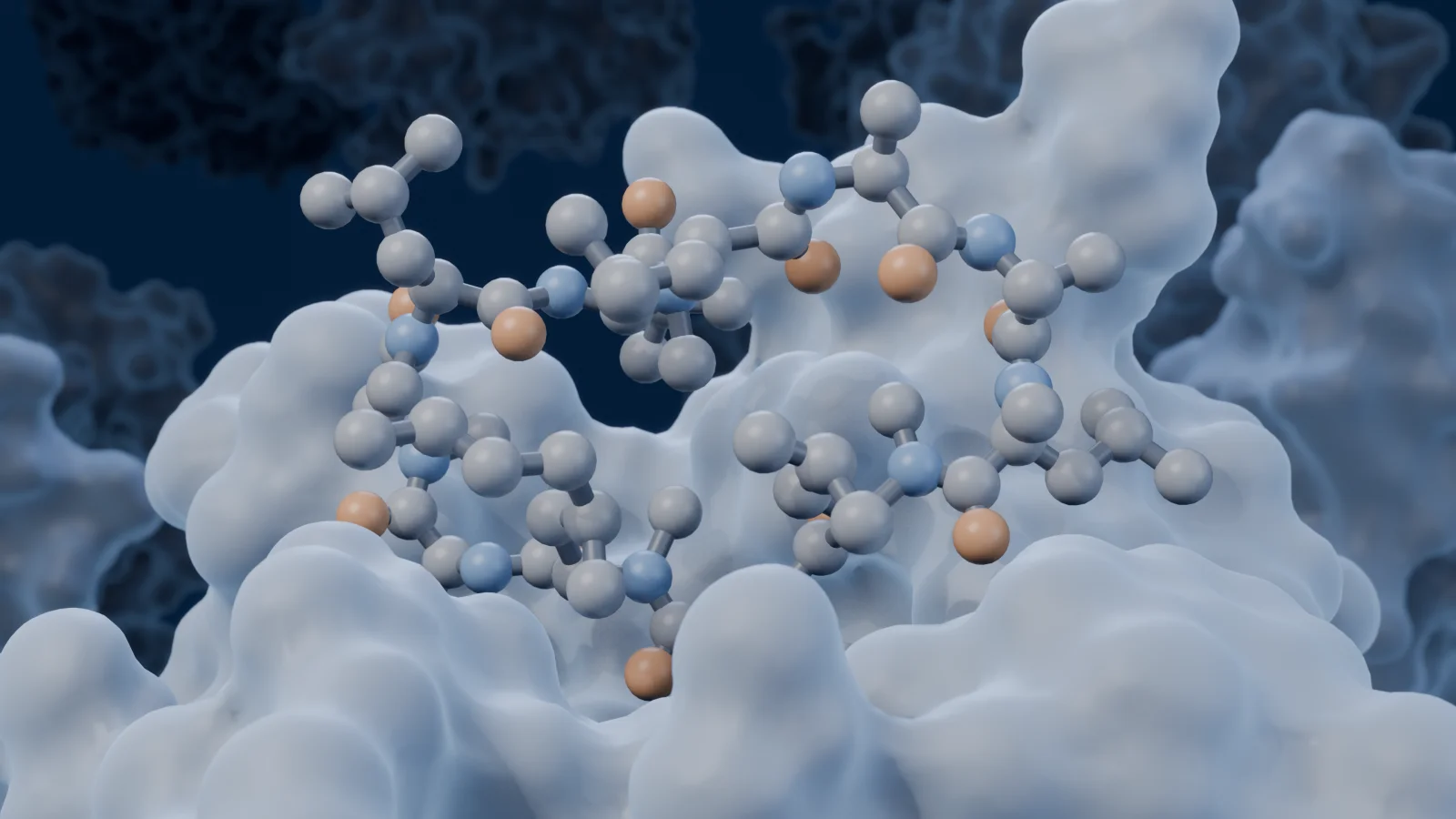
Molecular model depicting peptide binding to a target.
Open data helped drive advances in AI for proteins and small molecules. OpenPep aims to build that foundation for peptides. Starting with a shared database recording which peptides bind which proteins, and how strongly, we will train models to learn patterns of peptide–protein recognition and guide what to test next.
Produce targets
Cell-free protein synthesis will be used to produce a broad panel of disease-relevant proteins. The aim is to cover hundreds of targets, including proteins nominated by the scientific and clinical community, rather than concentrate measurements on a small number of proteins.
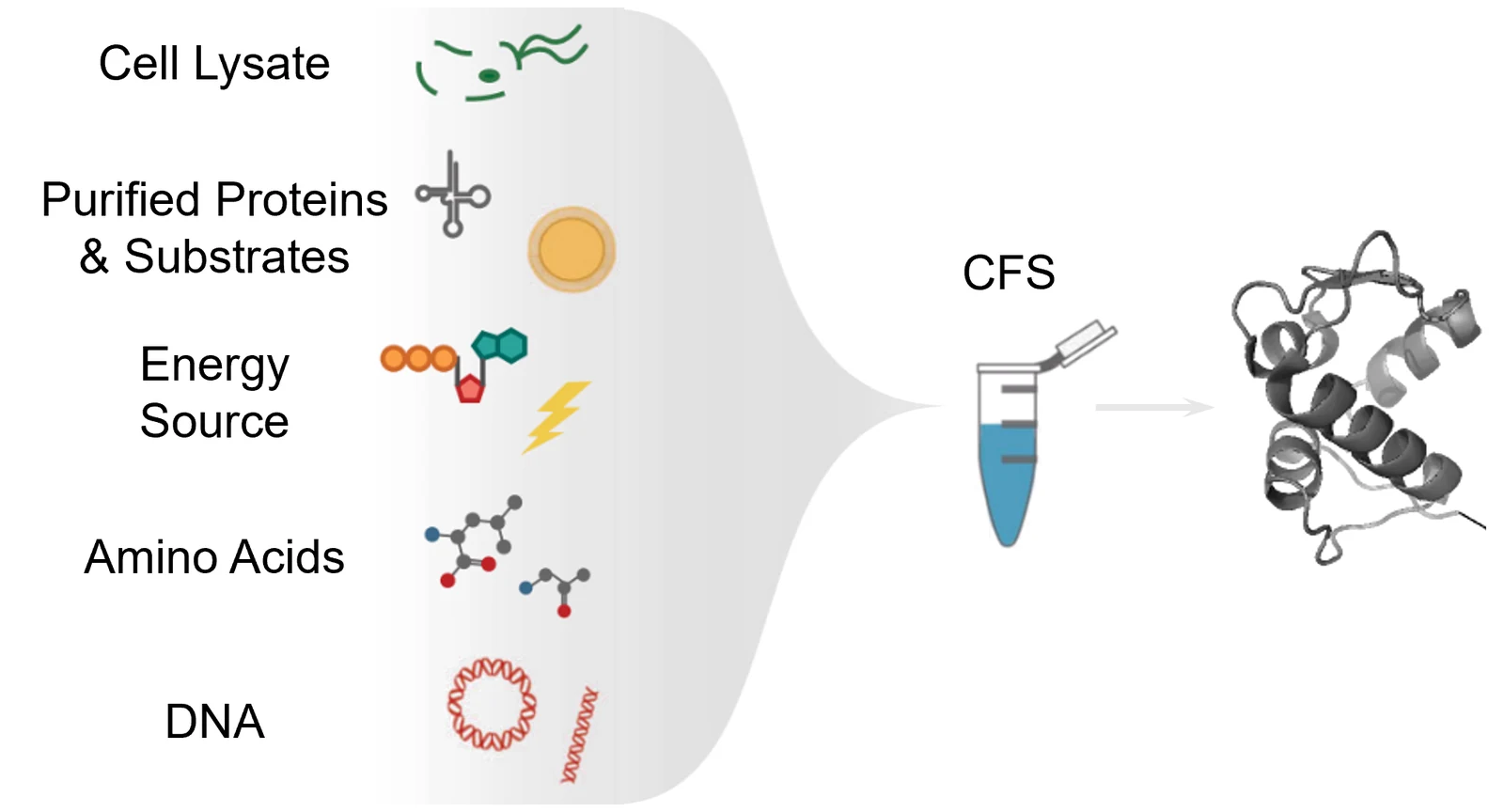
Cell-free protein synthesis. Cell lysate, purified proteins, an energy source, amino acids and DNA are combined to make the target protein without growing cells. Adapted from Tinafar, Jaenes and Pardee, BMC Biology 2019.
Measure binding
The target panel will be screened against libraries of synthetic peptides, including peptides built from chemical building blocks beyond the twenty natural amino acids. We use direct-to-biology methods, in particular affinity-selection mass spectrometry (AS-MS), to evaluate molecules without purification and feed the results straight back to the models that design the next experiment. Follow-up dose-response measurements characterize binding quantitatively.
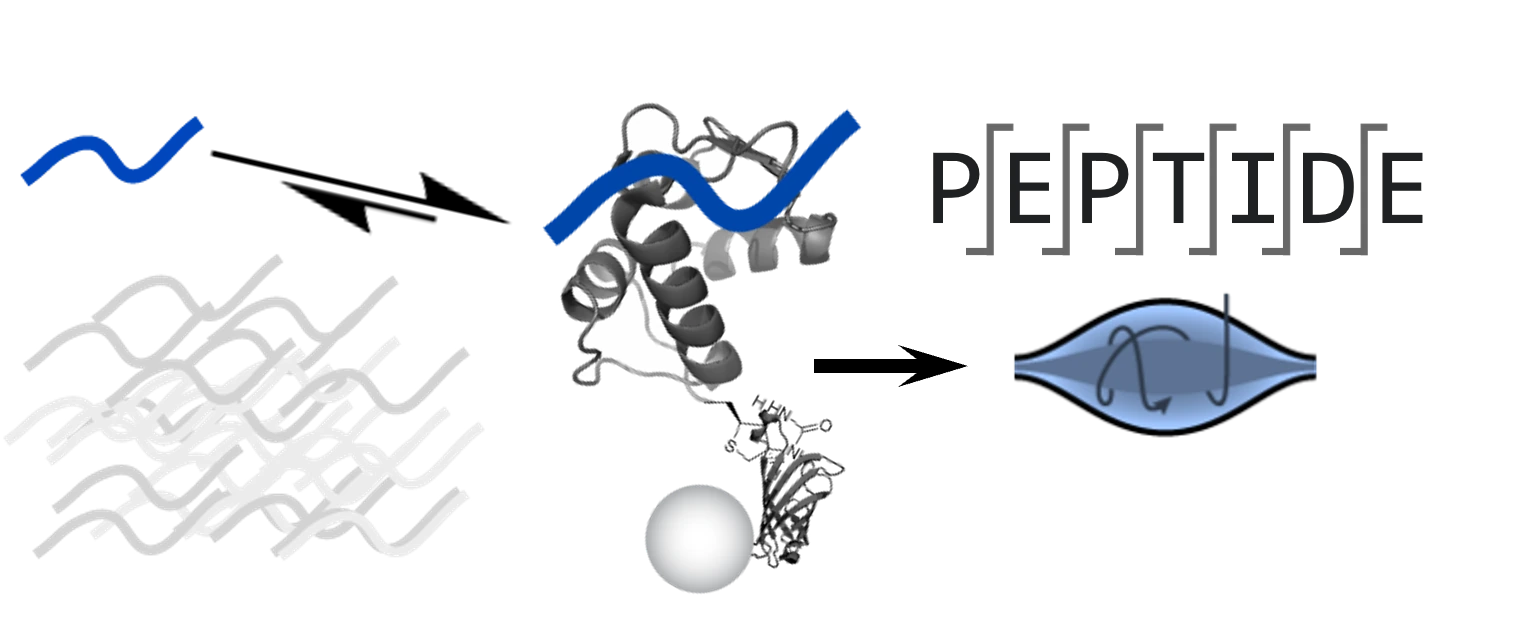
Affinity-selection mass spectrometry. Peptides from a library bind the target, bound peptides are recovered, and mass spectrometry identifies them.
These measurements will form OpenPep’s open database, recording which peptides bind which proteins and how strongly. Researchers will be able to use this data to study peptide binding and train AI models that help identify promising peptides for testing.
Public releases will include file details, column descriptions, and release-specific licensing information.
Train models
OpenPep also includes AI models built from this shared data. OpenPep Models will learn what makes a peptide more likely to bind a particular protein, helping researchers prioritize promising candidates from millions or billions of possibilities. Predictions will guide new experiments, whose results will expand the database and inform future models.
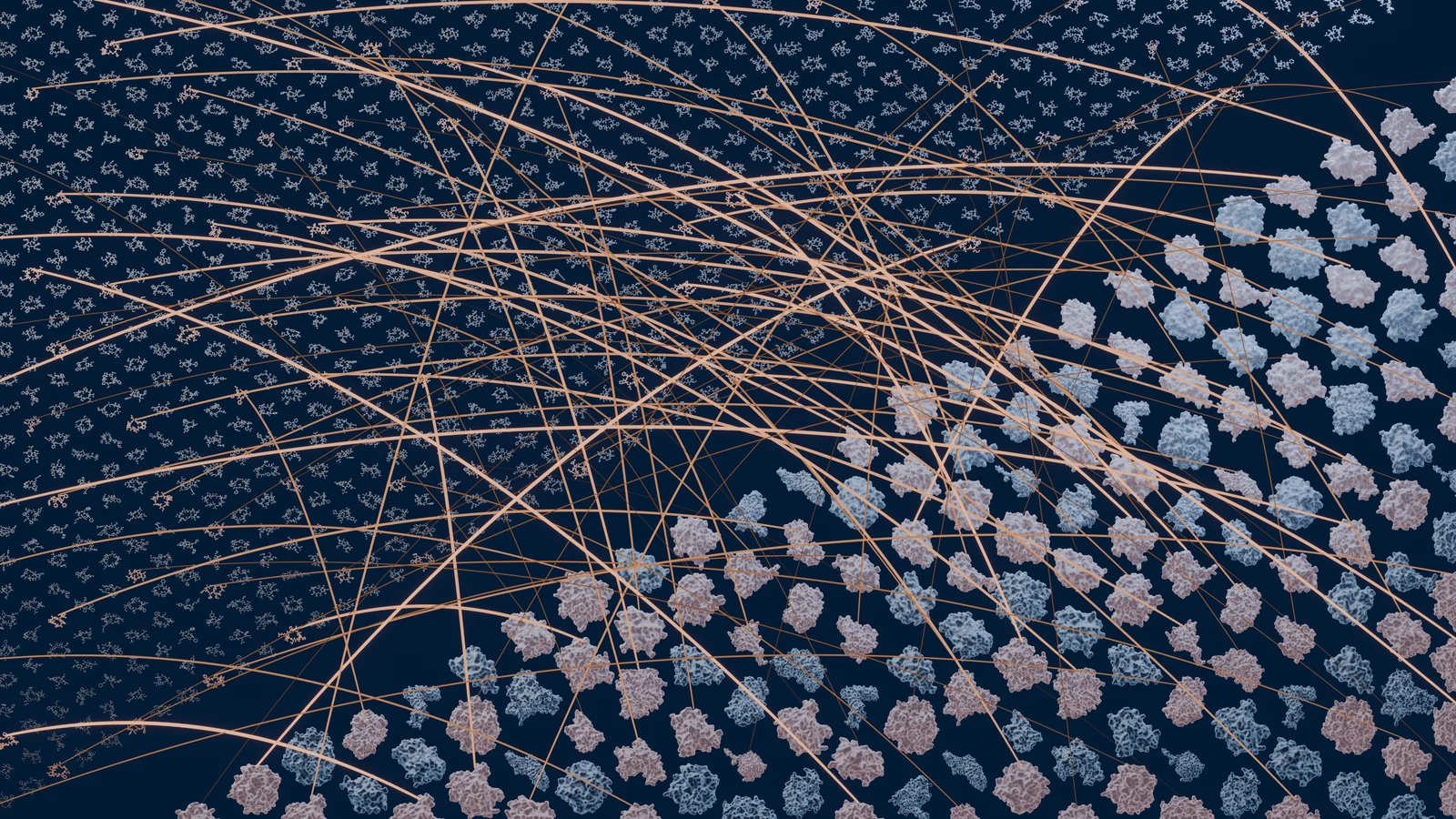
Models learn which peptides bind which proteins across the whole panel, not one target at a time.
Evaluation will hold proteins out of training and test predictions on those targets experimentally. This will help distinguish generalization across targets from performance on familiar examples. Results and model releases will be shared as they become available.
Help shape the target panel
Suggest a protein that could advance peptide discovery in your area of research.
Propose Target for Discovery